Building AI-Native Business Capabilities (Not Just Bolting AI On)
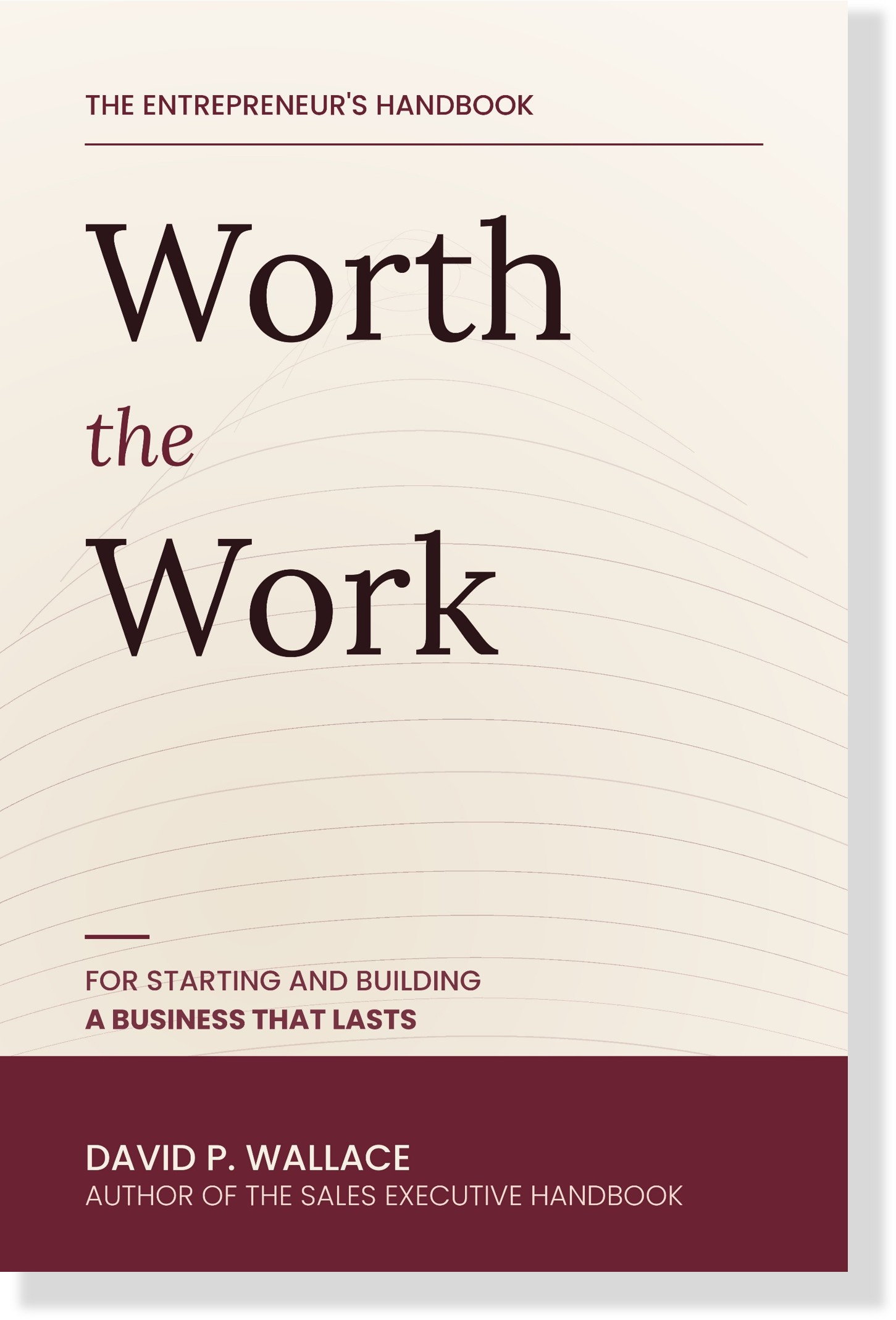
 “The best way to predict the future is to invent it. The best way to invent it is to leverage AI to do what humans alone cannot.” That’s how Chapter 12 of Worth the Work opens, adapted from Alan Kay’s original line — and it captures the distinction the chapter is built around: AI as a fundamental business capability, not a collection of tools bolted onto how you already operate.
If you’ve added a chatbot or an AI writing assistant somewhere in your business, you’ve adopted an AI tool. That’s different from building an AI-native business, and the difference matters for how much competitive advantage you actually get from it.
Not every AI application is worth building
Strategic implementation means being honest about where AI actually creates advantage versus where it just feels modern. High-value applications tend to share traits: data exists but isn’t being used well, the task involves pattern recognition at scale, personalization creates real customer value, or prediction beats historical analysis. Lower-value applications are the ones requiring genuine human creativity, relationship-building, or judgment calls where explainability matters more than speed.
Some AI capabilities are simply table stakes now — basic chatbots, email personalization, CRM insights — worth having to stay competitive but not worth over-investing in, since they don’t differentiate you. The businesses getting real advantage are the ones concentrating innovation resources on the applications that actually create it, rather than chasing every new tool because it’s available.
The mistakes that undercut the investment
A few patterns show up consistently in businesses that struggle with AI adoption:
- Over-reliance without human oversight. Automated decisions compound errors instead of catching them. Confidence thresholds that trigger human review, and regular audits of AI decisions, matter more than the sophistication of the tool itself.
- Data quality shortcuts. AI built on insufficient or inconsistent data produces unreliable output, no matter how good the model is. Data preparation has to come first, every time.
- Underestimating implementation complexity. Custom AI solutions consistently take longer than projected. Starting with commercial tools and piloting before a full rollout avoids most of this risk.
- Cost creep. Usage-based pricing scales faster than expected if nobody’s watching. Budget alerts and periodic tool consolidation keep this from becoming a quiet drain.
- Poor change management. The best AI tool fails if your team doesn’t actually use it. Involving people in tool selection and addressing job security concerns directly — rather than avoiding the conversation — determines adoption more than the tool’s feature set does.
What stays valuable as AI takes on more
As AI absorbs more of the operational and analytical work, the capabilities that keep you differentiated shift. Deep domain expertise — understanding your industry and customers at a level beyond what AI can learn from data — becomes more valuable, not less, because it’s what tells you where to point the AI in the first place. So does cross-domain synthesis: connecting insights across fields in ways that data analysis within a single domain can’t replicate.
The businesses that get this right aren’t the ones with the most sophisticated AI. They’re the ones that combine AI capability with the human judgment, relationship-building, and strategic thinking that AI still can’t do — treating AI as infrastructure that amplifies your team, not a replacement for the parts of the business that depend on people.
 Where to start
Chapter 12 lays out a straightforward sequence: assess where AI genuinely creates value in your specific business, evaluate your data and team readiness honestly, pick one high-value, low-risk project to start with, implement it with real success criteria, and only then build out a broader roadmap. Start small, measure results rigorously, and let what actually works — not what’s trending — determine where you invest next.
The dream is free. The business must be built.
Get your copy of Worth the Work on Amazon: https://www.amazon.com/dp/1735983624
