Your Business Doesn’t Have One Problem. It Has All of Them, at Once.
 If you’re running a business right now, you already know something most business books quietly ignore: your problems don’t show up one at a time.
You’re trying to close a sale while a key employee is giving notice. You’re revising pricing while your accountant is asking hard questions about cash flow. You’re thinking about culture while you’re also thinking about whether your website converts. None of it waits politely for the other pieces to get sorted first.
And yet most business books are written as if it does. There’s a shelf for strategy. A shelf for marketing. A shelf for leadership. A shelf for finance. Each one treats its slice of the problem as if it exists in isolation from everything else — as if a brilliant marketing campaign matters when your operations can’t fulfill what it sells, or a sharp financial model matters when you don’t have the resilience to keep going through a rough quarter.
It doesn’t work that way in real businesses, and I think most owners know it.
Why integration is the actual skill
I wrote Worth the Work around a simple premise: building a business that lasts isn’t about mastering one discipline. It’s about holding several disciplines together at the same time, and understanding how they affect each other.
A few examples of what that looks like in practice:
- Culture and strategy aren’t separate conversations. The team you build either reinforces your strategy or quietly undermines it, whether or not you’ve written the strategy down.
- Financial systems aren’t just for the accountant. The visibility you have — or don’t have — into your numbers determines how confidently you can make every other decision in the business, from hiring to pricing to when to say yes to a new opportunity.
- Marketing without operational readiness is a liability, not an asset. A campaign that works too well before your fulfillment can handle it doesn’t grow your business. It breaks trust with the customers it brought in.
This is the thread that runs through the book, from the chapters on culture and legal structure, through financial foundations, brand and go-to-market strategy, and into scaling. Each one is written to stand on its own if you need to solve a specific problem today. But they’re built to connect, because that’s how the actual work connects.
Who this is for, specifically
If you’re past the idea stage and actually operating a business, here’s where the book is likely to earn its place on your desk rather than your shelf:
- You’re making decisions on instinct because you haven’t had time to build the systems that would let you make them with more confidence
- You’re good at the thing your business does but less sure about the infrastructure — culture, legal structure, financial visibility — that determines whether it scales or stalls
- You’re at a growth inflection point, trying to figure out what got you here won’t get you there, and you need a framework for what changes next
- You want something you can come back to as different chapters become relevant, rather than something you read once and forget
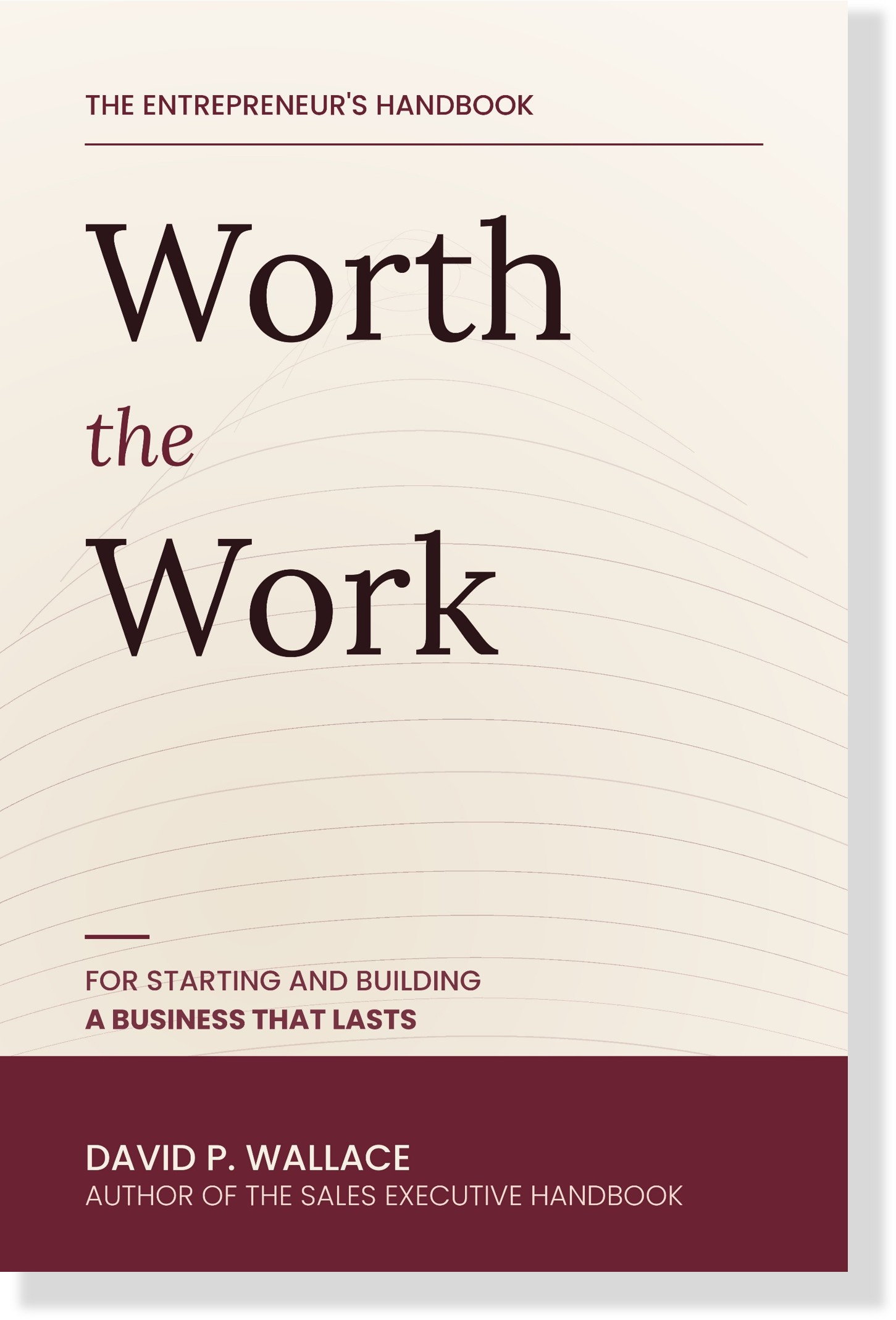 This isn’t a book of theory. It’s built from real engagements with real businesses, including the pattern I see constantly: a founder with a genuinely strong product and loyal customers whose revenue has stalled — not because the offering is weak, but because the business outgrew the informal systems it was built on. Structure, clear accountability, and a willingness to look at your own business the way an outside advisor would are what get that business unstuck. That’s what these chapters are built to help you do for yours.
You’ve already done the hardest part — you built something real. The chapters ahead are about making sure it lasts.
The dream is free. The business must be built.
Get your copy of Worth the Work on Amazon: https://www.amazon.com/dp/1735983624
